

The growing Global Inflation Crisis is once again becoming a major concern for households, businesses, and governments around the world. As the war involving Iran continues with no clear end in sight, rising energy prices and economic uncertainty are creating fresh pressure on global markets.
- Rising Oil Prices Are Fueling Inflation Worldwide – Global Inflation Crisis
- War Is Creating Economic Pressure Across the Globe – Global Inflation Crisis
- Central Banks Are Under Pressure – Global Inflation Crisis
- Federal Reserve Faces Tough Decisions – Global Inflation Crisis
- Consumers Are Starting to Feel Financial Stress – Global Inflation Crisis
- Global Markets Are Reacting to Inflation Fears – Global Inflation Crisis
- Inflation Is Changing Global Economic Forecasts – Global Inflation Crisis
- Energy Markets Remain the Key Focus – Global Inflation Crisis
- Businesses Are Also Facing New Challenges – Global Inflation Crisis – Global Inflation Crisis
- Investors Are Looking for Stability – Global Inflation Crisis
- Final Thoughts – Global Inflation Crisis
Across several countries, inflation is climbing faster than expected. Consumers are paying more for fuel, food, transportation, and daily essentials. At the same time, central banks are facing difficult decisions about interest rates while investors worry about slower economic growth.
What initially looked like a temporary economic shock is now turning into a long-lasting global challenge.
Rising Oil Prices Are Fueling Inflation Worldwide – Global Inflation Crisis
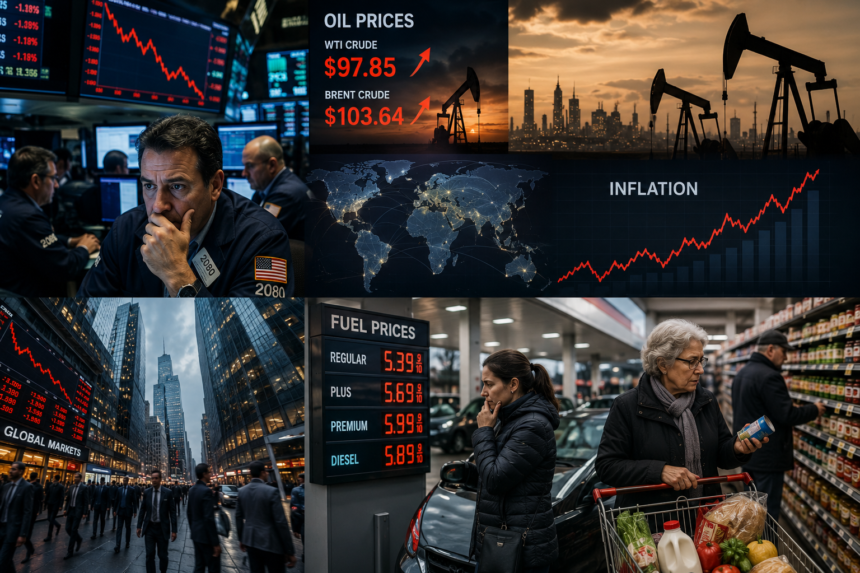
One of the biggest reasons behind the recent inflation surge is the sharp rise in oil prices.
The ongoing conflict in the Middle East has disrupted energy markets and increased fears about global oil supply stability. Since the region plays a major role in global energy production, even small disruptions quickly affect prices worldwide.
As oil prices move higher, transportation and manufacturing costs also increase. Businesses then pass those extra costs to consumers.
Fuel Prices Continue to Hurt Consumers
Higher fuel prices are now affecting millions of households.
In the United States, inflation climbed to 3.8% in April 2026, marking the fastest pace since 2023. Rising gasoline prices played a major role in pushing inflation higher.
Consumers are now spending more on:
- Petrol and diesel
- Electricity and utilities
- Food delivery and transport
- Airline tickets
- Grocery items
For many families, monthly budgets are becoming harder to manage.
War Is Creating Economic Pressure Across the Globe – Global Inflation Crisis
The impact of the conflict is not limited to one country.
The economic effects are spreading across Europe, Asia, and emerging markets as governments struggle to control inflation without damaging economic growth.
Europe Faces Energy Challenges
European economies remain especially vulnerable because of energy dependence and weak industrial recovery.
In Germany, investor confidence improved slightly in May 2026, but economists still warned that the broader outlook remains difficult due to high energy costs and prolonged geopolitical uncertainty.
Germany’s inflation rate reportedly rose to:
- 2.9% in April 2026
Meanwhile, unemployment pressures and weak manufacturing activity continue to challenge Europe’s largest economy.
Emerging Markets Also Feel the Pressure
Developing economies are facing a different kind of challenge.
Many countries already struggling with debt, currency pressure, and high import bills are now dealing with more expensive fuel and food costs.
As inflation rises globally, central banks in these countries may be forced to increase interest rates, which can slow business activity and investment.
Central Banks Are Under Pressure – Global Inflation Crisis
The current inflation environment is placing central banks in a very difficult position.
If they increase interest rates too aggressively, economic growth may slow down sharply. However, if they fail to control inflation early, prices could rise even further.
Federal Reserve Faces Tough Decisions – Global Inflation Crisis
The US Federal Reserve is currently under intense pressure from investors and economists.
Although some political voices continue calling for lower interest rates, inflation data suggests the Fed may need to keep borrowing costs high for longer.
Reports indicate:
- US consumer inflation reached 3.8%
- Core inflation rose to 2.8%
- Producer prices increased by 6% year-on-year
These figures remain well above the Fed’s long-term target of 2%.
Interest Rate Concerns Grow
Bond traders and financial institutions are increasingly betting that interest rates could remain elevated longer than expected.
Higher interest rates usually help control inflation, but they also:
- Increase borrowing costs
- Slow home buying
- Reduce business expansion
- Affect stock market performance
- Pressure household spending
This creates a delicate balancing act for policymakers.
Consumers Are Starting to Feel Financial Stress – Global Inflation Crisis
For ordinary people, inflation is no longer just an economic term discussed on television.
It is becoming a daily reality.
Household Budgets Are Tightening
In many countries, wages are no longer rising fast enough to keep up with living costs.
Consumers are spending more money on necessities while cutting back on non-essential purchases.
According to reports, Americans are increasingly:
- Searching for discounts
- Using loyalty programs
- Reducing unnecessary spending
- Relying more on credit cards
Lower-income households are feeling the pressure most strongly because energy and food expenses take up a larger share of their income.
Global Markets Are Reacting to Inflation Fears – Global Inflation Crisis
Financial markets around the world are closely monitoring inflation trends and geopolitical developments.
Every new update regarding the war or inflation data now influences stock prices, bond yields, and investor sentiment.
Bond Markets Show Growing Anxiety
Long-term government bond yields have moved higher in several countries as investors prepare for prolonged inflation pressure.
Analysts say rising oil prices and war-related uncertainty are making investors more cautious about long-term economic stability.
Higher bond yields often signal fears that inflation may remain persistent.
Stock Markets Remain Volatile
Stock markets are also experiencing increased volatility.
Investors are worried about:
- Slower corporate earnings
- Rising production costs
- Weak consumer demand
- Higher borrowing expenses
Although some sectors linked to artificial intelligence and technology continue attracting investment, broader market sentiment remains uncertain.
Inflation Is Changing Global Economic Forecasts – Global Inflation Crisis
Economists are now adjusting growth and inflation projections for 2026.
Several international forecasts suggest that inflation may stay elevated longer than originally expected.
Stagflation Risks Are Returning
Some analysts are warning about the possibility of stagflation.
Stagflation happens when:
- Inflation remains high
- Economic growth slows
- Unemployment increases
This combination creates major challenges for governments and central banks because normal policy tools become less effective.
Bloomberg reports and economic surveys indicate that the ongoing war is increasing fears of exactly this type of economic environment.
Energy Markets Remain the Key Focus – Global Inflation Crisis
The future direction of inflation may largely depend on what happens in energy markets.
Strait of Hormuz Concerns Continue
The Strait of Hormuz remains one of the world’s most important oil shipping routes.
Any further disruption in the region could:
- Push oil prices even higher
- Increase shipping costs
- Raise global inflation further
- Hurt economic growth worldwide
This is why markets continue reacting strongly to every major geopolitical development connected to the conflict.
Businesses Are Also Facing New Challenges – Global Inflation Crisis – Global Inflation Crisis
Companies around the world are adjusting strategies because of higher operating costs.
Supply Chains Are Becoming Expensive
Businesses are now paying more for:
- Raw materials
- Fuel
- International shipping
- Manufacturing
- Employee wages
As costs increase, many companies are either raising prices or reducing expansion plans.
Some industries, especially airlines, transport companies, and manufacturers, are under particularly strong pressure.
Investors Are Looking for Stability – Global Inflation Crisis
During uncertain economic periods, investors usually shift toward safer assets.
Gold, energy stocks, and defensive sectors often attract more interest during inflation-driven uncertainty.
At the same time, risky investments may experience sudden price swings as confidence weakens.
Financial experts say investors are now paying close attention to:
- Inflation reports
- Oil price trends
- Central bank meetings
- Global conflict developments
- Consumer spending patterns
Final Thoughts – Global Inflation Crisis
The ongoing Global Inflation Crisis is proving that geopolitical conflicts can quickly reshape economies worldwide. Rising oil prices, expensive energy, and growing uncertainty are now affecting businesses, consumers, and governments across multiple continents.
While some economies still show resilience through strong employment and consumer activity, inflation pressures continue building as the war drags on.
With inflation reaching 3.8% in the United States and energy costs rising globally, central banks may face even tougher policy decisions in the months ahead. Investors, businesses, and households are all watching closely for signs of stability.
For now, the world economy remains caught between slowing growth and stubborn inflation, a combination that could define the financial landscape of 2026.
Read another interesting article here: PSX Market Decline