

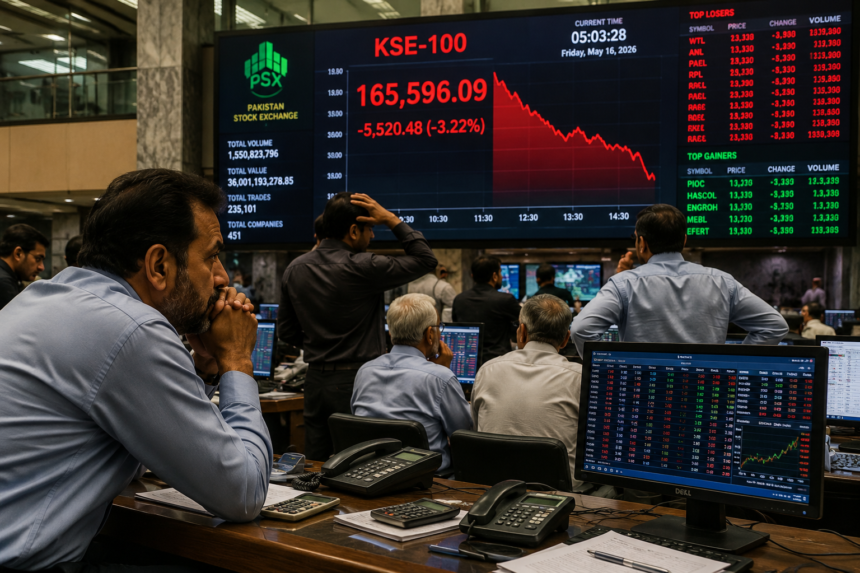
The latest PSX Market Decline has once again shaken investor confidence as the Pakistan Stock Exchange ended the week with heavy losses. The benchmark KSE-100 Index dropped sharply by 3.2%, reflecting growing uncertainty in global markets and concerns surrounding the slowing momentum of US-Iran peace negotiations.
- PSX Ends the Week in Negative Territory – PSX Market Decline
- Why Investors Became Nervous – PSX Market Decline
- Positive Economic Indicators Still Offered Support – PSX Market Decline
- Pakistan Outperformed the MSCI Frontier Markets Index – PSX Market Decline
- Auto Sector Emerged as a Bright Spot – PSX Market Decline
- Fiscal and Economic Indicators Showed Improvement – PSX Market Decline
- IMF Support Boosted Confidence – PSX Market Decline
- Foreign Exchange Reserves Also Improved – PSX Market Decline
- What Investors Are Watching Next – PSX Market Decline
- Final Thoughts – PSX Market Decline
For investors, it was a tense and emotional trading week. Every session brought fresh pressure, rising fears, and increased volatility. While Pakistan’s local economic indicators showed signs of improvement, geopolitical uncertainty continued to dominate market sentiment.
By the end of the week, the KSE-100 Index closed at 165,596 points, marking one of the most discussed developments in Pakistan’s financial sector this month.
PSX Ends the Week in Negative Territory – PSX Market Decline
The Pakistan Stock Exchange experienced a difficult trading week as selling pressure continued across major sectors.
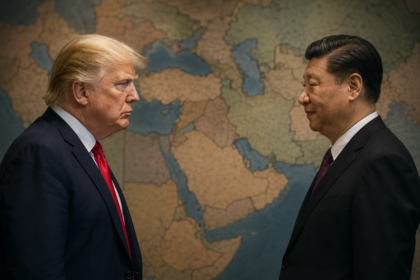
According to market analysts, uncertainty linked to developments in the Middle East played a major role in weakening investor confidence. Traders remained cautious as hopes for quick progress in the US-Iran peace process began to slow down.
The market lost a total of 5,520 points during the outgoing week.
Daily Performance of the KSE-100 Index
The week started with a relatively controlled decline, but pressure increased gradually.
Here is how the market performed throughout the week:
- Monday: KSE-100 closed at 170,506, down 610 points
- Tuesday: Index dropped 1,590 points to 168,916
- Wednesday: Market lost another 1,465 points
- Thursday: Index declined by 952 points
- Friday: Final session closed lower by 902 points
By Friday, the benchmark index settled at 165,596 points, extending the bearish trend.
Why Investors Became Nervous – PSX Market Decline
The biggest reason behind the latest market decline was uncertainty in international politics.
Slower US-Iran Peace Momentum
Investors closely watched developments related to peace negotiations involving the United States and Iran. Markets generally react strongly to geopolitical tensions because they directly affect oil prices, regional stability, and global trade confidence.
As hopes for faster diplomatic progress weakened, investors moved carefully and avoided aggressive buying.
This uncertainty created pressure not only on Pakistan’s stock market but also on investor sentiment across the region.
Fear of Regional Instability
Pakistan’s economy is highly sensitive to global energy markets and regional developments.
Any increase in Middle East tensions can:
- Raise oil prices
- Increase import costs
- Put pressure on inflation
- Affect foreign investment flows
- Create uncertainty in financial markets
Because of these concerns, many traders preferred short-term caution instead of long-term investment during the week.
Positive Economic Indicators Still Offered Support – PSX Market Decline
Despite the decline, several local economic developments provided some support to the market.
Analysts believe the losses could have been much worse if strong domestic indicators had not balanced investor fears.
Pakistan’s Panda Bond Success
One of the biggest positive developments came from Pakistan’s first-ever three-year Panda Bond issuance in China.
Pakistan successfully raised:
- $250 million
- At a 2.5% coupon rate
The bond issue received strong interest and was reportedly oversubscribed more than five times.
This showed that international investors still see confidence in Pakistan’s financial direction despite short-term market pressure.
Workers’ Remittances Remained Strong
Another encouraging sign came from overseas Pakistanis.
Workers’ remittances reached:
- $3.5 billion in April 2026
This represented an 11% year-on-year increase compared to April 2025.
For the first ten months of FY26, cumulative remittances climbed to:
- $33.9 billion
Strong remittance inflows continue to support Pakistan’s foreign exchange position and overall economy.
Pakistan Outperformed the MSCI Frontier Markets Index – PSX Market Decline
Even during a difficult week, Pakistan showed resilience in broader market comparisons.
Analysts noted that Pakistan outperformed the MSCI Frontier Markets Index by 4.1% during FY26-to-date.
Pakistan’s expected weight in the MSCI FM Standard Index was projected at:
- 5.8%
This adjustment will become effective from 29 May 2026.
Changes in MSCI Indices
Several companies also saw changes in their index positions.
The following developments were highlighted:
- Habib Metropolitan Bank added to the Standard Index
- Crescent Textile
- Highnoon Laboratories
- The Searle Company added to the Small Cap Index
- Murree Brewery removed from the Small Cap Index
These updates are important because they influence foreign investor interest and institutional investment flows.
Auto Sector Emerged as a Bright Spot – PSX Market Decline
While the broader market struggled, Pakistan’s auto sector delivered strong numbers.
Auto Sales Increased Sharply
Auto sales surged significantly in April 2026.
Key figures included:
- 22,000 units sold in April
- 42% month-on-month growth
- 108% year-on-year increase
During the first ten months of FY26, cumulative sales rose:
- 49% to 166,100 units
This growth reflected improving consumer demand and economic activity despite market volatility.
Fiscal and Economic Indicators Showed Improvement – PSX Market Decline
Pakistan’s broader economic indicators also painted a relatively positive picture.
Budget Deficit Remained Under Control
The country’s budget deficit during 9MFY26 stood at:
- Rs856 billion
- Equivalent to 0.7% of GDP
This was considered one of the lowest fiscal deficits recorded in decades.
According to analysts, higher petroleum levy collections and lower debt servicing costs helped improve fiscal management.
GDP Growth Improved
Pakistan recorded:
- 3.99% GDP growth in the third quarter of FY26
Sector-wise growth included:
- Industry: 4.7%
- Agriculture: 3%
- Services: 4.2%
These numbers suggested that economic activity continued to recover despite external uncertainties.
IMF Support Boosted Confidence – PSX Market Decline
Another major development came from the International Monetary Fund.
According to analysts, the IMF released:
- $1.3 billion
The amount was disbursed under two ongoing programs after Pakistan successfully met several key targets.
The finance ministry also continued discussions with the visiting IMF team regarding the upcoming FY27 budget.
This development offered some reassurance to investors who remain focused on Pakistan’s financial stability.
Foreign Exchange Reserves Also Improved – PSX Market Decline
Pakistan’s foreign exchange reserves showed slight improvement during the week.
State Bank reserves increased by:
- $17 million
Total reserves reached:
- $15.9 billion
Although the increase was modest, it still reflected relative stability in the external account position.
What Investors Are Watching Next – PSX Market Decline
Market participants are now closely monitoring several important developments.
These include:
- Future progress in US-Iran peace negotiations
- Pakistan’s upcoming federal budget
- IMF discussions
- Inflation trends
- Oil price movements
- Currency stability
Any positive breakthrough in geopolitical tensions could help restore investor confidence quickly.
However, uncertainty may continue to create pressure in the short term.
Final Thoughts – PSX Market Decline
The recent PSX Market Decline clearly showed how sensitive financial markets are to global political developments. While Pakistan’s economy displayed several encouraging signs, including strong remittances, improved GDP growth, successful Panda Bond issuance, and rising auto sales, investor fears linked to slowing US-Iran peace momentum overshadowed those gains.
The KSE-100 Index closing at 165,596 points after a 3.2% weekly decline reflects the cautious mood currently dominating the market.
Still, many analysts believe Pakistan’s improving economic indicators could support recovery if geopolitical conditions stabilize in the coming weeks.
For investors, patience and careful monitoring remain critical as the market navigates through uncertainty.
Read another interesting article here: Rs 1500 Prize Bond Results